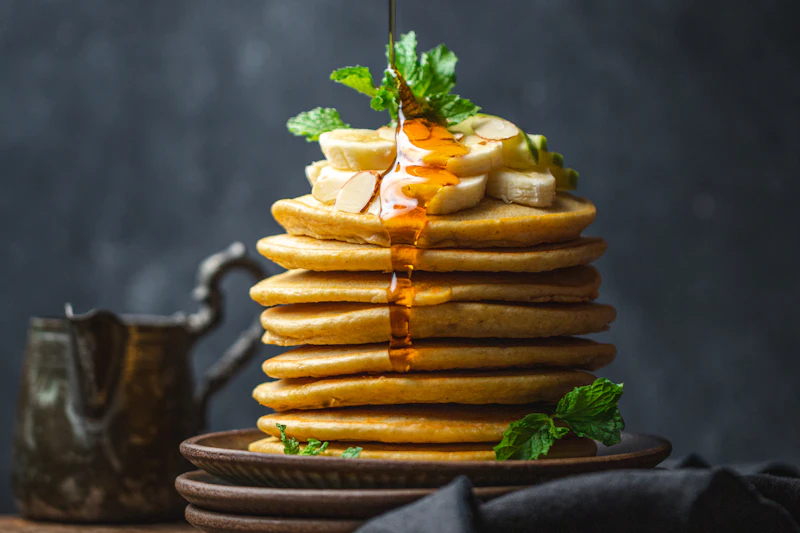
Pancakes look like the simplest thing in the world to make, and in many ways they are. But the difference between a dense, rubbery disc and a tall, tender stack comes down to a few bits of kitchen chemistry that are worth understanding.
Rule one: stop stirring
The moment flour meets liquid, gluten begins to form. A little gluten gives structure; too much makes pancakes tough and chewy. Mix the wet and dry ingredients only until the flour disappears. The batter should still be lumpy. Those lumps will cook out — the toughness won’t.
A lumpy batter is not a mistake. It’s the sign of a pancake that will be light and tender.
Rule two: let it rest
Give the batter five to ten minutes before cooking. The flour hydrates fully, the gluten relaxes and the leavening gets a head start. You’ll notice the batter thicken and develop small bubbles on the surface.
Why buttermilk works
Buttermilk is acidic. When it meets bicarbonate of soda, the two react immediately to produce carbon dioxide — thousands of tiny bubbles that lift the batter as it cooks. Many recipes use both baking soda and baking powder: the soda reacts with the acid, while the powder provides a second rise once it hits the heat.
No buttermilk? Stir a tablespoon of lemon juice into a cup of milk and leave it for five minutes.
A reliable base recipe
- 200 g plain flour
- 1 tbsp sugar
- 1 tsp baking powder
- ½ tsp bicarbonate of soda
- ½ tsp salt
- 300 ml buttermilk
- 1 egg
- 30 g melted butter
Master the heat
Medium heat is your friend. Too hot and the outside burns before the centre sets; too cool and the pancakes spread thin and pale. Test with a small spoonful first — the first pancake is always for the cook.
Flip once, when bubbles appear across the surface and the edges look dry. Don’t press down with the spatula. Every bit of air you squeeze out is height you’ll never get back.
Serve immediately, in a stack, with whatever makes your Sunday feel like Sunday.